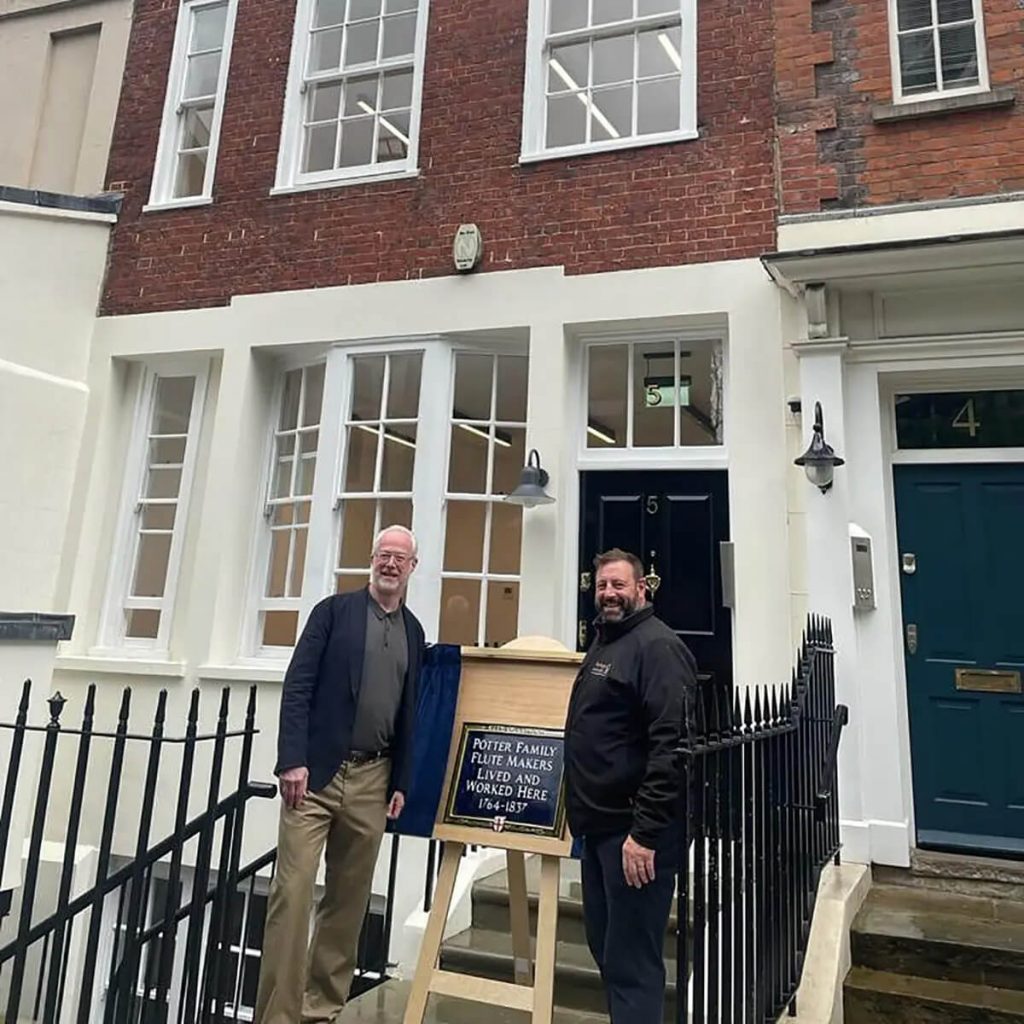
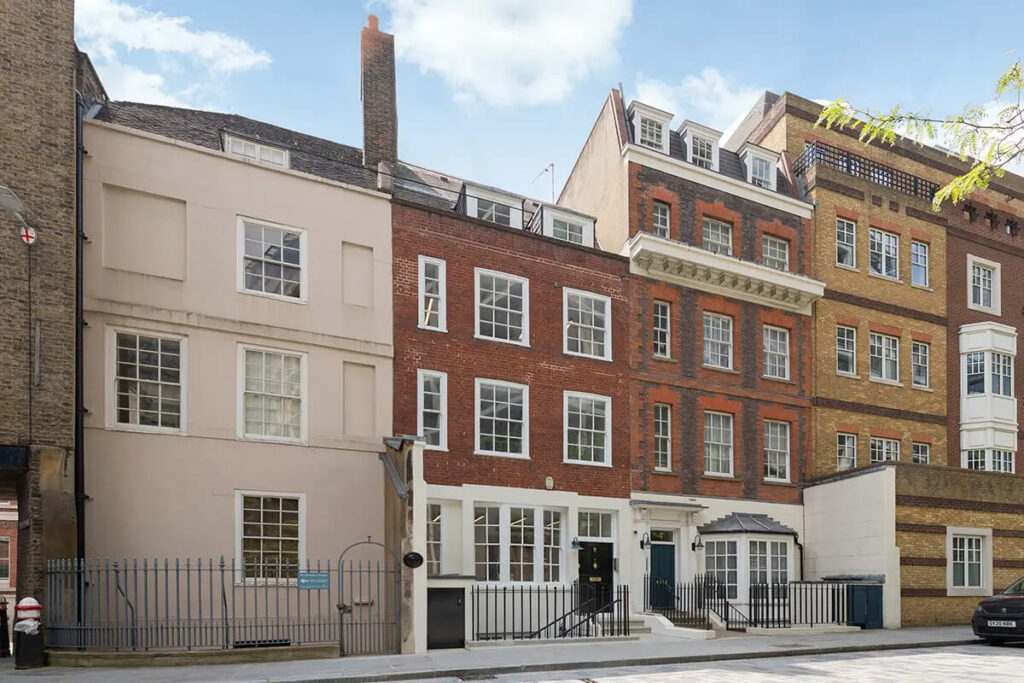
In 2019, Heritage Unlimited were engaged by the owner of 5 Pemberton Row to provide a Heritage Statement to support a planning application and listed building consent for work to the grade II listed building. It was during our research that we rediscovered the house was the former home and workshop of Richard Potter, an influential 18th century flute maker.
5 Pemberton Row along with 4 Pemberton Row and 17 Gough Street are the remaining properties of a terraced row of townhouses dating to c.1700. The area was obliterated during the Second World War from enemy aerial bombardments and the surrounding buildings and the other properties forming the row modern buildings.
Richard Potter moved to 5 Pemberton Row in 1764 with his family where he manufactured the ‘German Flute’. His sons, Richard and William were apprenticed to their father however, Richard pursued a musical career whilst William worked with his father. The company was renamed Potter and Son in 1801.
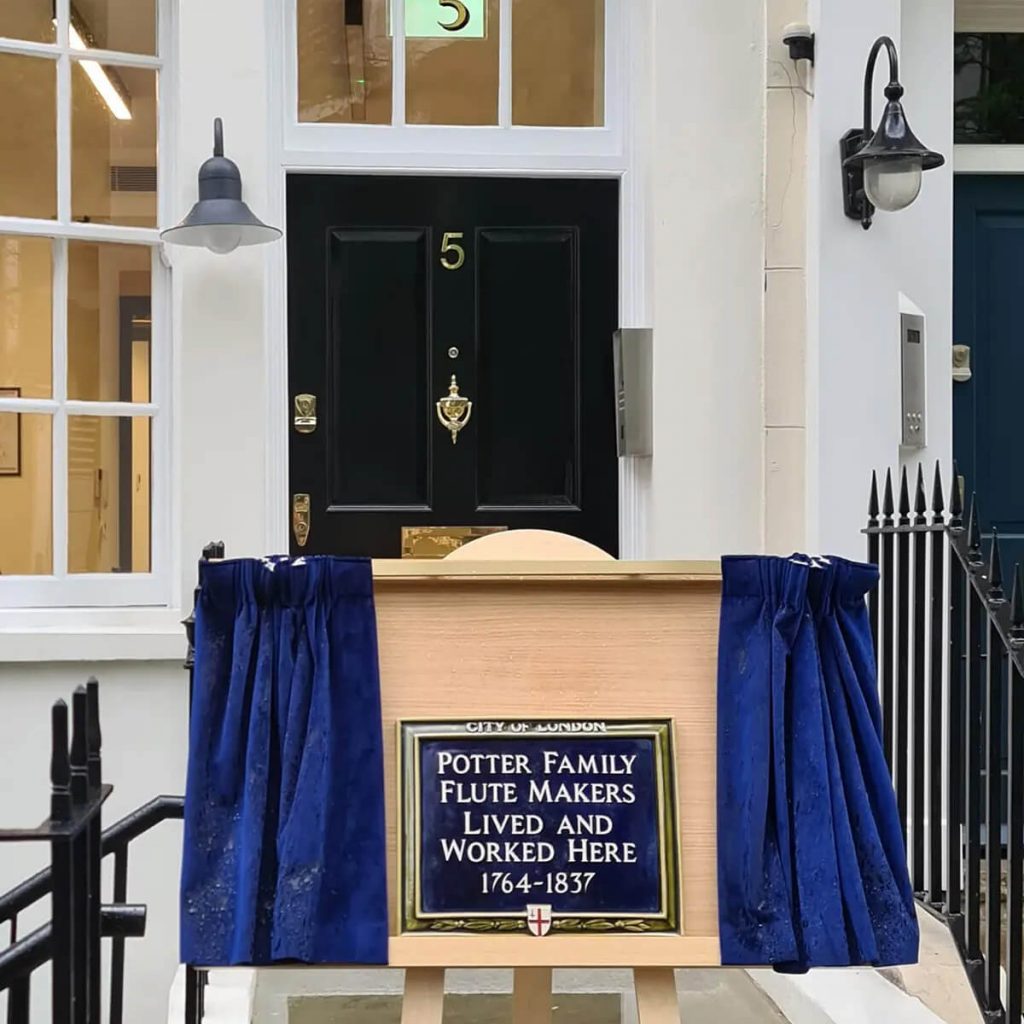
William Henry joined his father’s company and in 1801 the business was listed as Potter and Son. In 1805 William became Master of the Turner’s Company. In 1808, William was granted a patent for a device for the flute keys, which produced an effect called the ‘glide’. However, the popularity of this this device was only enjoyed for a temporary period. In general, William continued to manufacture flutes in the style begun by his father. In 1817, William relocated the business from Johnson’s Court back to 5 Pemberton Row.
The rediscovery of property’s association with the Potter family was used in the Heritage Statement to provide public benefit to overcome the less than substantial harm the works caused to the listed building and Fleet Street Conservation Area – a requirement of the National Planning Policy Framework. This public benefit was gained through enhancing the historic value of the building and conservation area thus increasing the significance of these two designated heritage assets and the importance of this surviving row of late 16th/early 17th century town houses.
The neighbouring building, 17 Gough Square is a grade I listed building has an historical association with an important figure in 18th century London. It was the former home of Samuel Johnson (1709-1784) between 1748 and 1759. Samuel Johnson, better known as Dr Johnson, was an author and lexicographer who was commissioned in 1746 to produce a dictionary. It was whilst living at 17 Gough Court, Dr Johnson complied and published the first modern English language dictionary.