
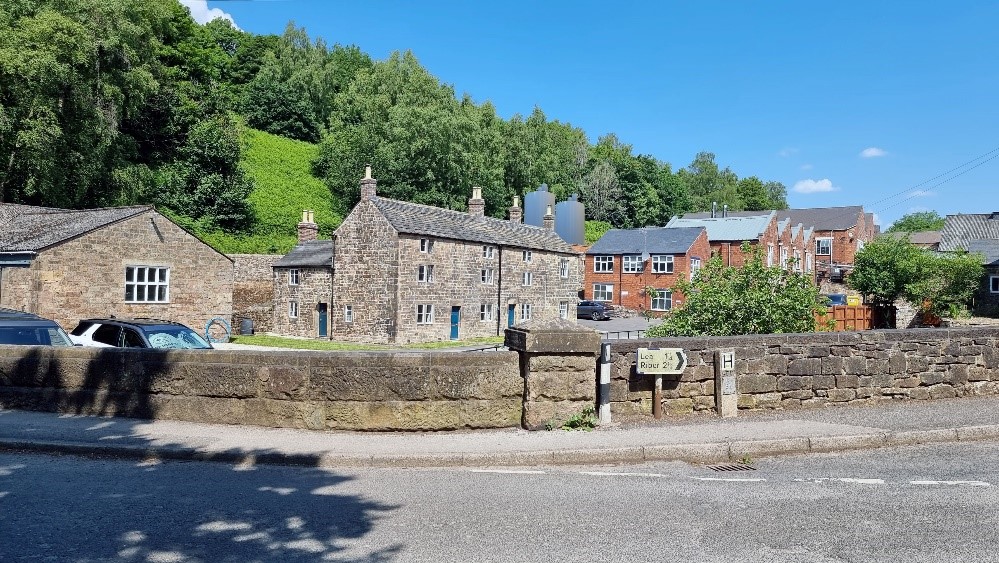
Any development at a site concerning a heritage asset requires the local planning authority (LPA) and conservation officers to fully understand the historic interests and significance of the site and the setting in which it stands. Certain tests must be adhered to by law in order to assess the impact of any change as covered by the Planning (Listed Buildings and Conservation Areas) Act 1990, the Town and Country Planning Act (1990) and National Planning Policy Framework (NPPF) alongside Local Planning policy and Historic England Guidelines. An assessment of the site by a professional heritage consultant should help to advice the LPA on the nature, extent and level of significance of the heritage assets and in turn what nature, level and degree of harm may be inflicted by a proposal, and if so, what mitigating measures have been applied to reduce or minimise any harmful impact.
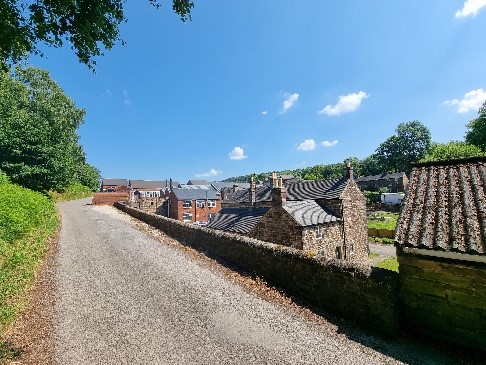
In July 2022, Heritage Unlimited were contacted about a planning application at Lea Mills in Matlock involving the erection of two large water tanks which had raised concern in the community due to their size and wished to appeal against the proposal. HUL was engaged to present evidence in respect of matters of cultural heritage and compile an appeal statement to formally assess the impact the application may have on the heritage assets.
Lea Mills is an historic mill from the late 18th-21st century, one of the only examples of a working mill of its period still in operation. The site is located within the Derwent Valley World Heritage Site (DVWHS/WHS). The site was designated in 2001 and covers the industrial landscape of the area, defined by the many historic textile mills which occupy the valleys. It is overlooked by nine grade II listed buildings and is located on the border of two conservation areas, Castle Top, Lea Bridge, and High Peak Junction Conservation Area (CLHCA), and the Dethick, Lea, and Holloway Conservation Area (DLHCA). HUL determined that Lea Mills is considered to be a non-designated heritage asset due to its age, rarity, historic association with the area, social and communal value and all other criteria laid out in Historic England guidelines.
HUL undertook a thorough assessment of the site, heritage assets and proposal. The proposed works were considered to impart a high degree of impact and harm to the historic assets without mitigating circumstances and alternative solutions could be found.
HULs appeal statement concisely provided justification for the application to be carefully considered and as a result the application was withdrawn.